
Selected Publications


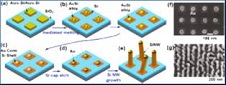
 PaperEffect of Surface Defects on InGaAs/InAlAs Quantum Cascade Mesa Current-voltage Characteristics.
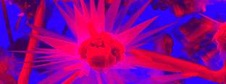
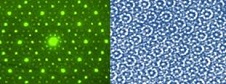 PaperThe second natural quasicrystal, and the first to exhibit the crystallographically-forbidden decagonal symmetry.
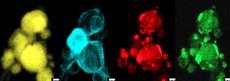
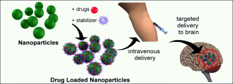

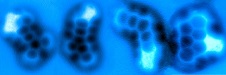 PaperSolving a puzzle of 50-years in the Petroleum arena by determining the structures in petroleum pitch M-50.
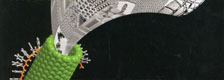
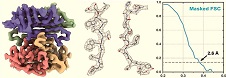 PaperHigh-yield monolayer graphene grids for near-atomic resolution cryo-electron microscopy of proteins.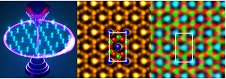

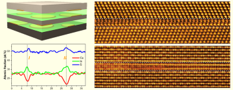

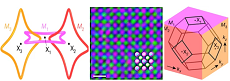
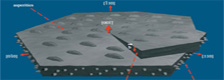
 PaperEvidence of a room-temperature quantum spin Hall edge state in a higher-order topological insulator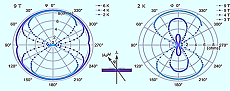


Professor Nan Yao is the founding director of Princeton University’s Imaging and Analysis Center (IAC) and an Inaugural Professor of the Practice. For more than three decades, he has advanced both fundamental science and practical applications of microscopy, contributing to new knowledge of materials and innovations in imaging technology. At Princeton, he has built world-class facilities, designed a curriculum in materials characterization, and fostered interdisciplinary research, while mentoring and teaching thousands of students, postdoctoral researchers, and professionals across disciplines.
After earning his Ph.D. in applied physics and electron microscopy from Arizona State University under pioneering electron microscopist John M. Cowley, Yao began his career in industry, first at Shell Development Company and later at ExxonMobil Research and Engineering. In 1993, he joined Princeton University to help establish its interdisciplinary Microscopy Program, which evolved into today’s IAC. Under his leadership, the IAC has become a world-class materials characterization facility, praised by an NSF-MRSEC review committee as “among the best in the world for advanced imaging and analysis of materials.”
Yao is best known for his co-discovery of the first natural quasicrystal, a landmark achievement that resolved a long-standing question in solid-state physics. Building on Dan Shechtman’s 1982 discovery of synthetic quasicrystals – a finding that earned the 2011 Nobel Prize in Chemistry – Yao played a central role in demonstrating that such aperiodic structures can also form under natural conditions. This work is often regarded as “the next chapter” of Shechtman’s breakthrough. In the late 1990s, Yao partnered with Paul J. Steinhardt and Peter J. Lu to initiate the first systematic diffraction-based search for natural quasicrystals, resulting in a 2001 paper in Physical Review Letters. In 2008, a candidate sample from the Koryak Mountains was identified by Luca Bindi, and Yao’s electron microscopy provided the first images and diffraction patterns, confirming icosahedral symmetry and establishing a new, stable solid phase – neither crystalline nor amorphous. Published in Science (2009) and cited in the Nobel Prize press release, the discovery of the first natural quasicrystal overturned an over two-century belief that all solids must be either crystalline or amorphous, revealing that nature itself can forge a new, long–range–ordered non-periodic state of matter yet under extraordinary conditions. Subsequent studies have shown that this quasicrystal formed under extremely high-pressure, high-temperature conditions in space. In 2015, Yao’s microscopy confirmed a second natural quasicrystal with decagonal symmetry, further expanding the field and providing rare insight into alloy formation in cosmic environments and the primordial materials of the early solar system.
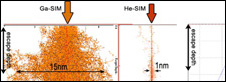
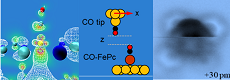
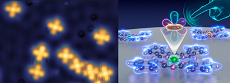
Beyond this landmark achievement, Yao’s research has delivered numerous firsts: the first direct real-space visualization of electron orbital signatures within individual atoms (2023); development of the first 300 keV environmental-cell transmission electron microscope (1991); a theoretical explanation for the superior resolution of helium-ion microscopy over SEM (2008); and the first direct demonstration of mechanically breaking a single dative bond (2021), revealing new insights into force-driven chemical reactivity at the single-atom scale. His work has pushed back the origin of animals by ~100 million years through the discovery of a 650-million-year-old sponge-like fossil (2010) and has identified the earliest known use of diamond, dating to 4000 BC (2005). He coauthored the lead article in Nano Letters’ inaugural issue (2001), underscoring his broad impact on nanomaterials research.
Yao integrates advanced imaging, diffraction, spectroscopy, and in-situ methods with computational modeling to investigate structure–composition–processing–property relationships in complex and quantum materials for applications in nanotechnology, energy, environmental science, and health. He has authored two widely used books (Handbook of Microscopy for Nanotechnology and Focused Ion Beam System: Basics and Applications) and 18 book chapters, as well as over 340 peer-reviewed papers in leading journals, including Science and Nature. Collaborating with more than 60 research groups at Princeton, he has also partnered extensively with numerous industry leaders, including ExxonMobil, DuPont, GE, Merck, Colgate-Palmolive, Eli Lilly, Johnson & Johnson, Bristol-Myers Squibb, Nvidia, and many start-ups. He instituted Princeton’s first industrial seminar series in 2016. In partnership with Nature, he also founded the Princeton–Nature Conference Series (2018, 2022, 2024, 2026), “Frontiers in Electron Microscopy for the Physical and Life Sciences,” a high-profile forum that convenes international leaders to examine and advance emerging microscopy technologies.
Yao established and led Princeton’s materials characterization curriculum and has been a deeply committed educator at both the undergraduate and graduate levels, teaching more than 1,200 students in his regular courses. He also established a global outreach program of free workshops and short courses that has trained more than 6,000 students worldwide, including more than 800 industrial scientists from over 140 companies. He has played a pivotal role in training the first generation of electron microscopists in several African countries, expanding global scientific capacity. His mentees have gone on to earn Rhodes, Fulbright, and Hertz Fellowships, as well as NSF Graduate Research Fellowships and MSA and MRS Student Awards. In recognition of his impact, Yao has received 14 Princeton teaching awards, including the Excellence in Teaching Award and the Commendation for Outstanding Teaching, and in 2024 was praised by Princeton President Christopher L. Eisgruber for his “extraordinary and unusual record of sustained excellence, even by Princeton’s high standards.”
Yao is a Fellow of the American Association for the Advancement of Science, the Materials Research Society, the Microscopy Society of America, and the Royal Microscopical Society. He is internationally recognized for more than three decades of contributions to discovery, instrumentation, and education. Through pioneering breakthroughs, innovative imaging and analysis technologies, and a deep commitment to mentorship, he has bridged fundamental science and practical application. His work continues to influence advances in materials research, imaging, and analysis.
| |
|
 Princeton University
 Imaging and Analysis Center